
Therapeutic Yoga and Lower Back Pain

Introduction
Therapeutic yoga has been shown to be effective in helping people (including myself) manage, diminish or heal lower back pain, or more specifically non-specific lower back pain. As our lifestyles become increasingly sedentary, more of us have poor posture from sitting at desks all day which leads to health / structural issues like lower back pain. Active jobs such as building can also lead to back pain due to lifting heavy loads and repeated movements with poor alignment. Perhaps then it is unsurprising that many of us are beginning to suffer from lower back troubles. In the UK it is estimated that 80% of adults will experience back pain at some point in their lives, with up to 50% experiencing it at any one point in time (Palmer et al., 2000). In the USA a 2013 survey found that over 25% of adults had experienced back pain for one day in the previous 3 month period. In any case lower back pain is common and takes away from quality of life.


How can yoga help?
Yoga when practised therapeutically has been shown to be effective in helping to reduce lower back pain. As we know there are many aspects of yoga but this blog explores how yoga poses (asana), breath practices (pranayama) and mindfulness meditation can be effective in alleviating the experience of lower back pain.
Yoga Poses / Asana
Tight muscles (such as the iliopsoas) and weak muscles (such as the erector spinae) can cause pain through poor alignment and can lead to a muscle or bone pinching on a nerve. Ultimately we want our muscles to be strong and pliable so that they work harmoniously with each other, so we can go about our lives pain free.
Key areas we want to focus on:
The Spine (e.g erectae spinae and multifidus)
The Lower Back (particularly your quadratus lumborum)
The Core (e.g transversus abdominis)
The Upper Leg (tight hamstrings can cause pinching in of lower back)
iliopsoas gets a special mention as it attaches in the lower back and the femur. So if this muscle is tight it can create issues with the lower back.
The Pelvic Girdle (e.g glutes, abductors, adductors, pelvic floor muscles)
Key yoga asana
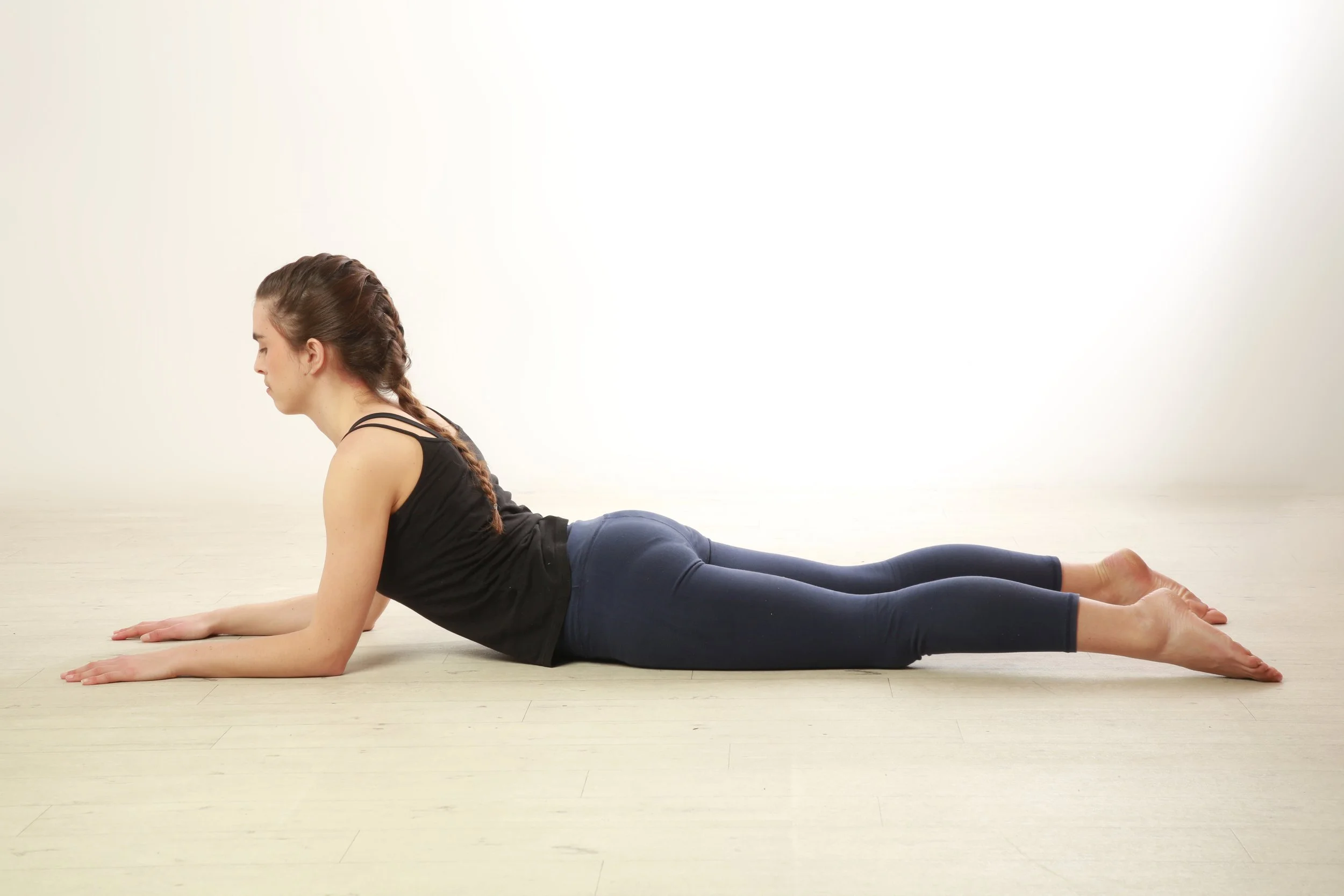
Back strengtheners, e.g cobra.
Core strengtheners e.g plank - sorry guys.
Hip openers e.g butterfly.
Lateral Stretches (to get that quadratus lumborum) e.g ghosh style half moon.
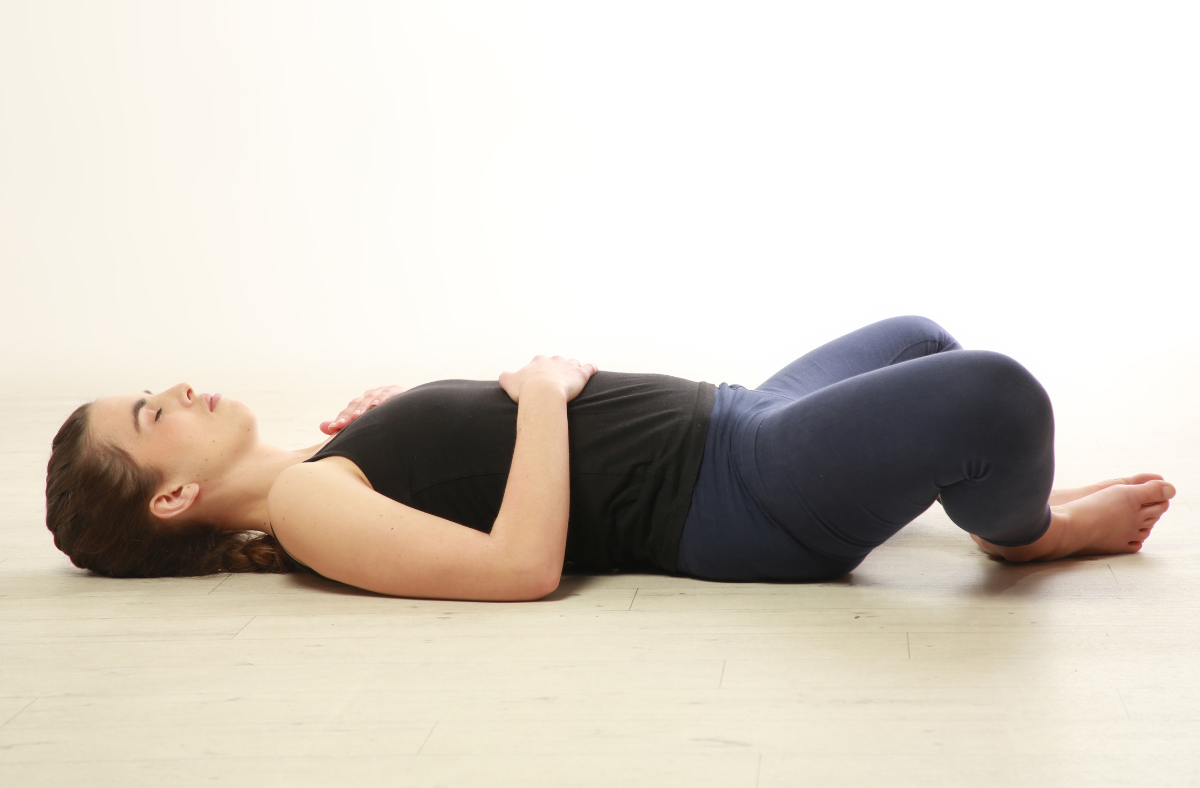
Reclined Butterfly - with a coherent breath
Relax on your back and bring your feet together, let the knees fall open (supported with blocks if you have them). Inhale and exhale for a 4 count. Making sure both inhale and exhale are the exact same length.
Breath
Two key ways diaphragmatic breathing help are:
1) Massaging the fascia / deep connective tissue around the hips /lower back.
2) Shifting the body into a relaxed state. Diaphragmatic breathing innervates the vagus nerves which causes more activation of the parasympathetic nervous system (the relaxation response). You might not connect your lower back pain to stress but your body sure does. Try thinking of tension as the physical manifestation of stress and it’s not hard to see how breathing from the diaphragm can help release those tight hip muscles.
Mindfulness / Meditation and Chronic Pain
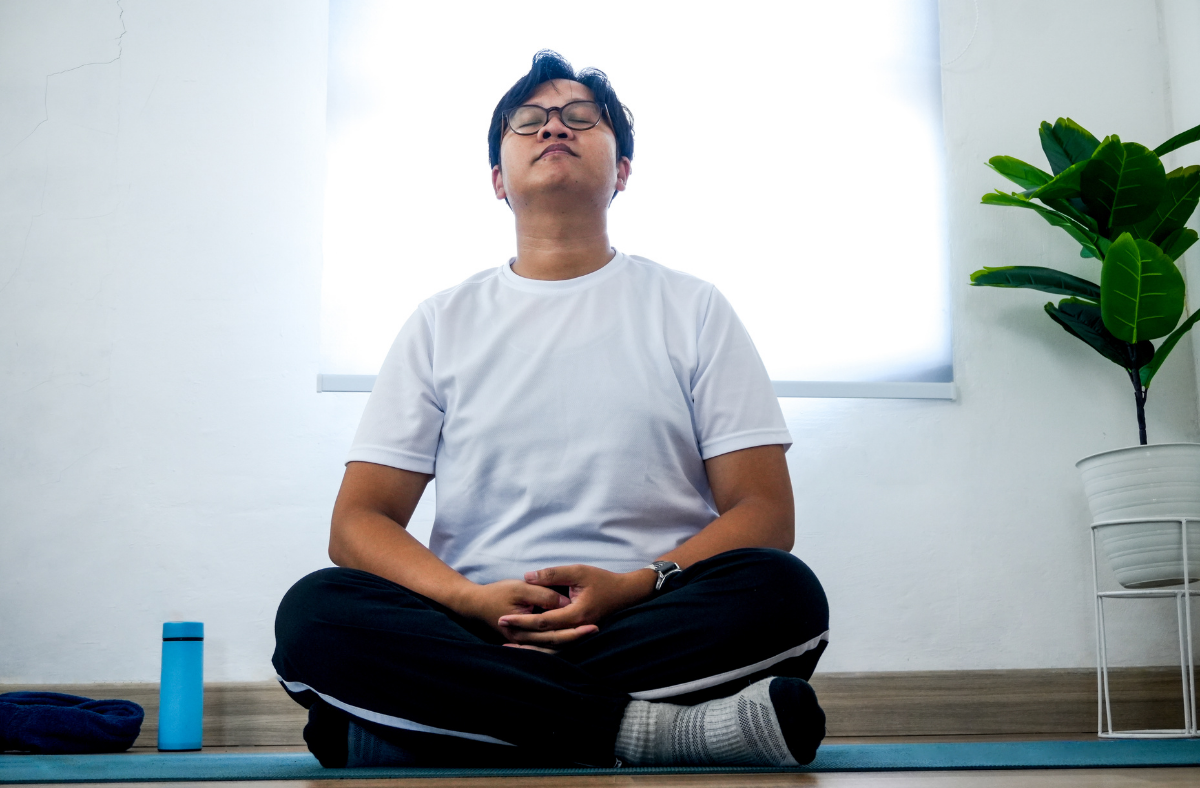
Mindfulness practice helps us to be able to step back and observe what it is we are actually experiencing. It’s a great place to really see the intersection of western science and eastern philosophy. Essentially you want to watch what is happening, entering a state of consciousness known as conscious awareness, without reacting. So you are feeling the sensation without letting the mind create stories as to the meaning behind the sensation.


-
Lets keep it short and simple. Science shows that mindfulness meditation can reduce the experience of chronic pain - leading to an increase in overall enjoyment of life yay! There is one particular study that is really interesting. Before we go there I want to be absolutely clear. This is NOT saying that your experience of lower back pain is not real and ‘just in your head’. Just to be very, very clear! Lower back pain is a very real experience. But it does make you question what is really causing it. The study by Brinjikji et al (2015) brings to light that many people have degenerative changes but experience no pain. And the opposite can be true too. It begs the question then what really is causing the pain? It’s a hard question and can be very frustrating when you have lower back pain and can’t get a straight answer. So while good posture and pliable muscles do help a lot of people (myself included) if you find the back pain still persisting it might be worth trying out some mindfulness. Something to ponder none the less.
-
Yoga has been around for thousands of years and initially involved with spiritual aspirations to help free us from suffering - physically, mentally, emotionally and spiritually. It utilised a variety of tools designed for personal transformation and back then yogis were more interested in working with and understanding the nature of the mind, than physical postures. From an eastern perspective (not unlike what our science friends found) it is the story the mind creates about the sensation that creates the suffering / experience of pain.
Another way of looking at pain and framing it in a more positive light (although let’s be real in the throes of lower back pain that is a laughable suggestion, but in all seriousness) is seeing it as our body’s alarm system. Rather than trying to turn off, drug or grin and bear it what would happen if instead we tried to listen to it? What is it telling us to change? What is it asking us to do?
A yogic lens see’s all elements of ourselves as interconnected, body, mind and spirit. From this ‘psychosomatic perspective’ say, I would be reflecting on areas in my life I might not be setting strong and appropriate boundaries and areas I might not feel fully supported. Sometimes to heal the lower back it might take physical asana but at others a simple life change (or a big one) can somehow heal it instantly.
-
While my own back pain is managed through posture and breath (because it was a physical injury that caused it) a friend in the UK had an experience like I mentioned above. Upon embarking on our course in London she pretty quickly began experiencing debilitating lower back pain. Throughout the course she was repeatedly picked on and was clearly not being supported fairly by the faculty. Miraculously, when she was kicked off (unfairly I might add, but nevertheless a massive relief minus the $7000+ pounds down the drain ) it disappeared pretty much overnight. Weirdly enough we were talking about her back in a cafe in North London. A lady sitting beside us, whom also happened to work in a similar profession, made a comment about lower back pain being connected to being unsupported. We both laughed but it actually made a lot of sense. And I soon learned that actually her story is not all that uncommon. Sometimes our back pain can be reflecting what is happening in our environment and it can be asking us to make some changes.
Can Yoga be the problem?
Yes absolutely. This is why 1:1 sessions can be so effective! While fast paced styles of yoga have their benefits for some people they are also the ones where you are most at risk of injuring your back. By moving fast as opposed to slowly and mindfully you increase the risk of tearing a ligament, pulling a muscle or accidentally exacerbating an existing imbalance in the body. As the saying goes the no.1 cause of injury in yoga is your ego. If you listen to your body you will be fine. The problem is many people don’t! I’m not here to say don’t practise these styles, there are still many benefits. But if you do you just might want to change how you approach the postures. Be more mindful and keep things symmetrical. Talk to your teacher if you are experiencing lower back pain as there are some asana you would be wise to avoid. If they are unable to help, feel free to reach out via the form below.
Last Notes
This blog post focuses specifically on non-specific lower back pain - the diagnoses given to 90% of people with lower back pain. If you have other symptoms it’s important to get it checked by the doctor to rule out more serious conditions like cauda equina, spinal fracture or a spinal infection.
Otherwise feel free to reach out - we look forward to working with you and helping you to find freedom from your lower back troubles!
For more information or to book a place in a private or group session please fill out the form below.
